
Why Open CTI keeps your calls out of reach for AI
If your 2027 plan has one line for the Open CTI migration and another for AI, the company is about to pay for the contact center twice. Salesforce retires Open CTI on February 28, 2028, so the first project has a hard date. The AI project usually gets scoped later, by a different team, after the new voice setup is already live. Then someone discovers the call data landed in the wrong place, and the rebuild starts again.
The fix is to treat them as one project with two phases. This post is for the CIO or IT director who has to make that work. Four decisions made during the migration decide how soon Agentforce can work on your calls, and every one of them costs less now than after go-live.
Why Open CTI keeps your calls out of reach for AI
Open CTI was never a native Salesforce product. Salesforce ran the CRM, your telephony partner ran the phone, and the two systems never talked to each other directly. Salesforce's own Trailhead module on the retirement spells out the result. Transcripts and call records don't land on core Salesforce objects, so Agentforce can't use them. Omni-Channel routing can't see voice either, so supervisors manage calls and digital channels as two separate floors.
Salesforce Voice changes the plumbing. Recordings and real-time transcription are built in. Agentforce can surface next best actions during a live call, write the case wrap-up afterward, and hand a call from an AI agent to a rep with the full transcript attached.
None of that works on its own. The AI reads whatever the migration puts in front of it. Every month on Open CTI is another month of customer conversations that never become data your service team or your AI can use.
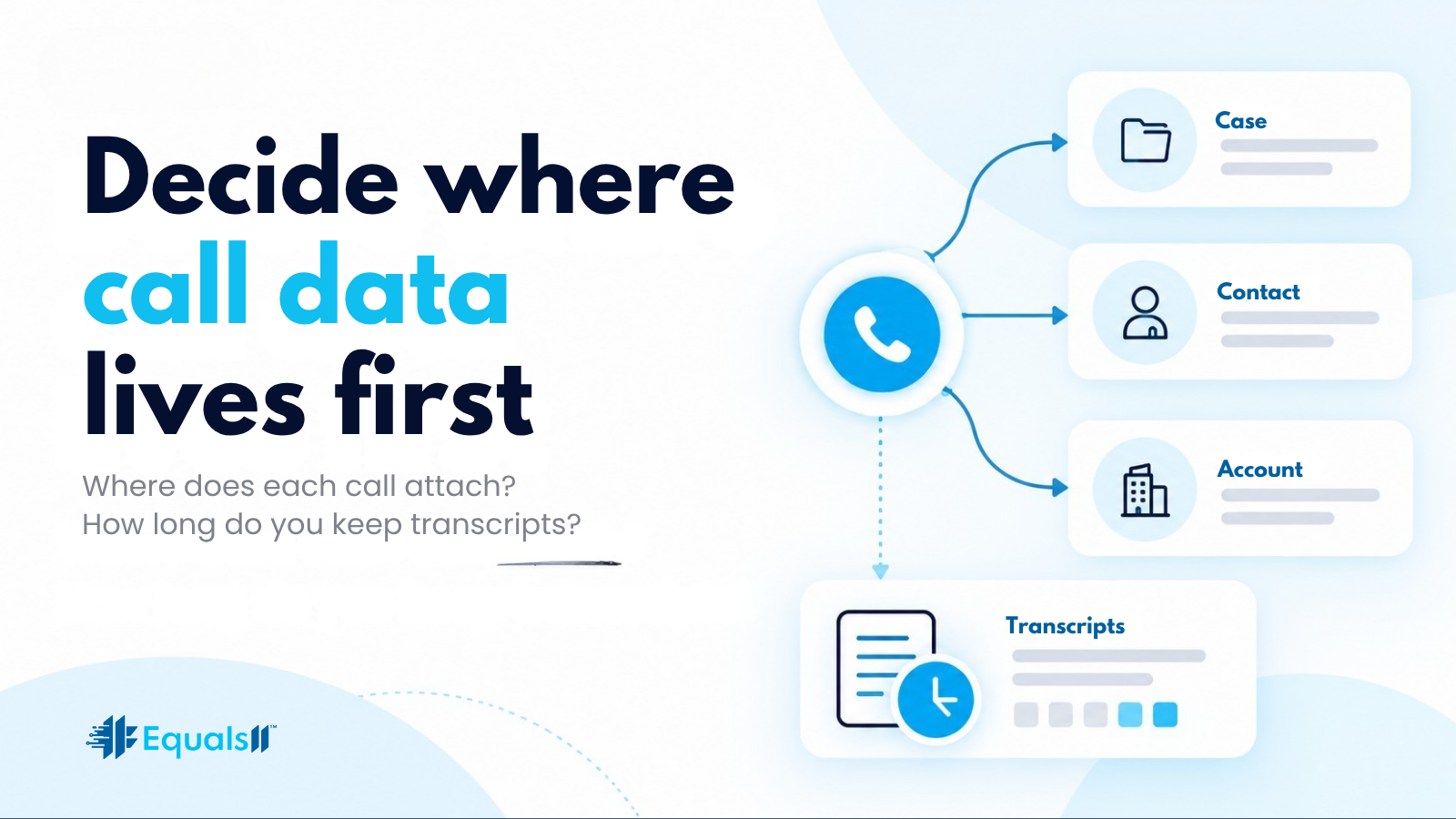
Decide where call data lives before you pick a migration path
Salesforce offers more than one route off Open CTI, including Partner Contact Center and Agentforce Contact Center. Teams tend to choose the path first and sort out the data later. Flip that order.
Before anyone compares paths, IT should answer three questions. Which records does a call attach to: the case, the contact, the account, or all three? How long do recordings and transcripts stay in Salesforce, and where do they go after that? Which reports will read the new call data, and do their definitions match the numbers leadership already uses?
The answers shape what the AI can see. An agent can't summarize a customer's last three calls if those calls sit on three different records with no shared link.
Skip this step, and you migrate the data model twice, once for the deadline and once when the AI project starts. The second time, you are reworking live production data instead of designing it cleanly.
Design the handoff between AI agents and reps now
Voice puts calls into the same Omni-Channel routing your reps use for chat and email. You have to rebuild routing anyway, so plan for AI agents in that rebuild, even if none go live in 2027.
Decide which call types an AI agent takes first. Simple, high-volume requests like order status are the usual candidates. Billing disputes and complaints are not. Set the rule for when the agent hands off, and decide what the rep sees when the call lands: the transcript, the reason for the call, and the record the agent already updated.
Then build queues and capacity rules that can absorb that handoff. Routing designed only for human reps gets redesigned the day the first agent goes live, and customers notice. They give their account number to the agent, then repeat it to a person.
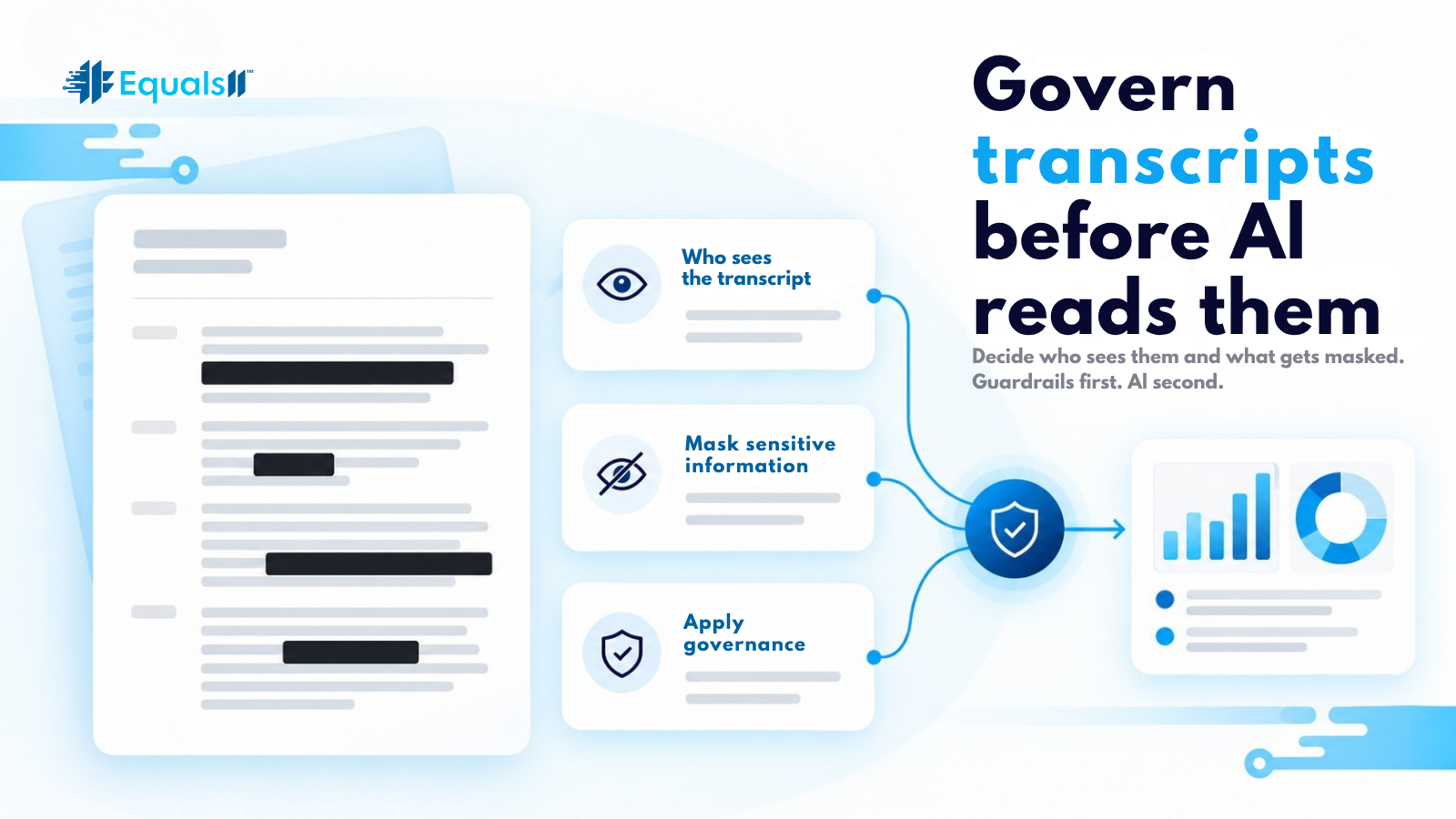
Put governance on call transcripts before any AI reads them
A transcript is a written record of everything a customer said out loud. That can include card numbers, health details, home addresses, and complaints about named employees. On Open CTI, most of that never reached Salesforce. After the migration, it sits on records your sharing rules and permission sets control, and an AI agent reads it under whatever access you give it.
Decide before cutover who can open recordings and transcripts, which details get masked or excluded, and how long each is kept. Then decide which actions an AI agent can take on its own during a call and which need a person to approve them. Agent access can drift from user access in ways a standard review misses, and we break that down in our post on Agentforce and PHI. The same logic applies to voice, with more sensitive data per record.
A transcript exposed to the wrong profile is a compliance finding. An AI rollout that legal pauses after launch costs far more than one built with guardrails from the start.
How to sequence the migration and the AI rollout
The deadline is in 2028. The budget decisions are happening now.
This quarter, audit what depends on Open CTI today (here's what to check) and make the data and governance decisions above. Put AI in scope for the 2027 budget, even if activation is a year out.
Next, build and test the target state in a sandbox, then cut over in phases so the contact center keeps taking calls (how to migrate without downtime).
Last, turn on AI for one queue once the call data has held up in reporting for a few weeks. Turning it on at cutover means two new systems change at once. When something breaks, nobody can tell which one caused it.
Where Equals11 fits
Equals11 runs the Open CTI migration and builds the AI layer with the same team. We start with a No-Cost Baseline to map what depends on Open CTI today and where your call data needs to land. Growth Engine designs the target state with Agentforce in scope, migrates it, and activates AI once the data can support it. Continuum keeps the same people on your org after go-live. One team owns the plan and the build, so nothing gets lost between a strategy deck and the contact center floor.
Salesforce is not expensive. Misalignment is.
Frequently asked questions
Does Agentforce work with Open CTI?
Not natively. Salesforce's Trailhead guidance states that Open CTI has no native connection to Agentforce Voice, and call data from Open CTI doesn't land on the core objects Agentforce reads. Moving to Salesforce Voice is the path to AI on your calls. For the full retirement timeline, see what Open CTI retirement means for your business.
Should we turn on Agentforce during the Open CTI migration?
No. Migrate first, confirm the call data shows up correctly in reports, then activate AI on a single queue. Doing both at cutover makes failures harder to trace.
Who should own the Open CTI migration, IT or the contact center?
IT should own the architecture: the data model, integrations, security, and AI governance. The contact center owns call flows and agent readiness. Problems start when the contact center runs it as a phone project, and IT learns about the data decisions after go-live.
What should IT decide before choosing a migration path?
Decide where call records attach, how long recordings and transcripts are kept, who can access them, and which reports depend on call data. Those answers narrow the path choice and keep the AI roadmap from forcing a second migration.
Find out what your org needs before Agentforce can work on your calls.
Make your Open CTI migration simpler and build it for what comes next.
Equals11 can help you map what needs to move, where your call data should live, and how to prepare the new setup for Agentforce from the start.
