
What to audit before your Open CTI migration
2027 budgets are being built right now. An Open CTI migration that does not make it into this cycle lands in the 2028 budget instead, and by then the February 28, 2028 retirement date is months away rather than a year and a half. Salesforce put the framework in maintenance mode already. The date is not moving in your favor.
The figure you put in that budget depends on work that has not been done yet in most orgs. Nobody has counted what actually runs on Open CTI. Without that count, you are pricing a phone system replacement, and the invoice arrives for something considerably larger. The phone system was never the expensive part.
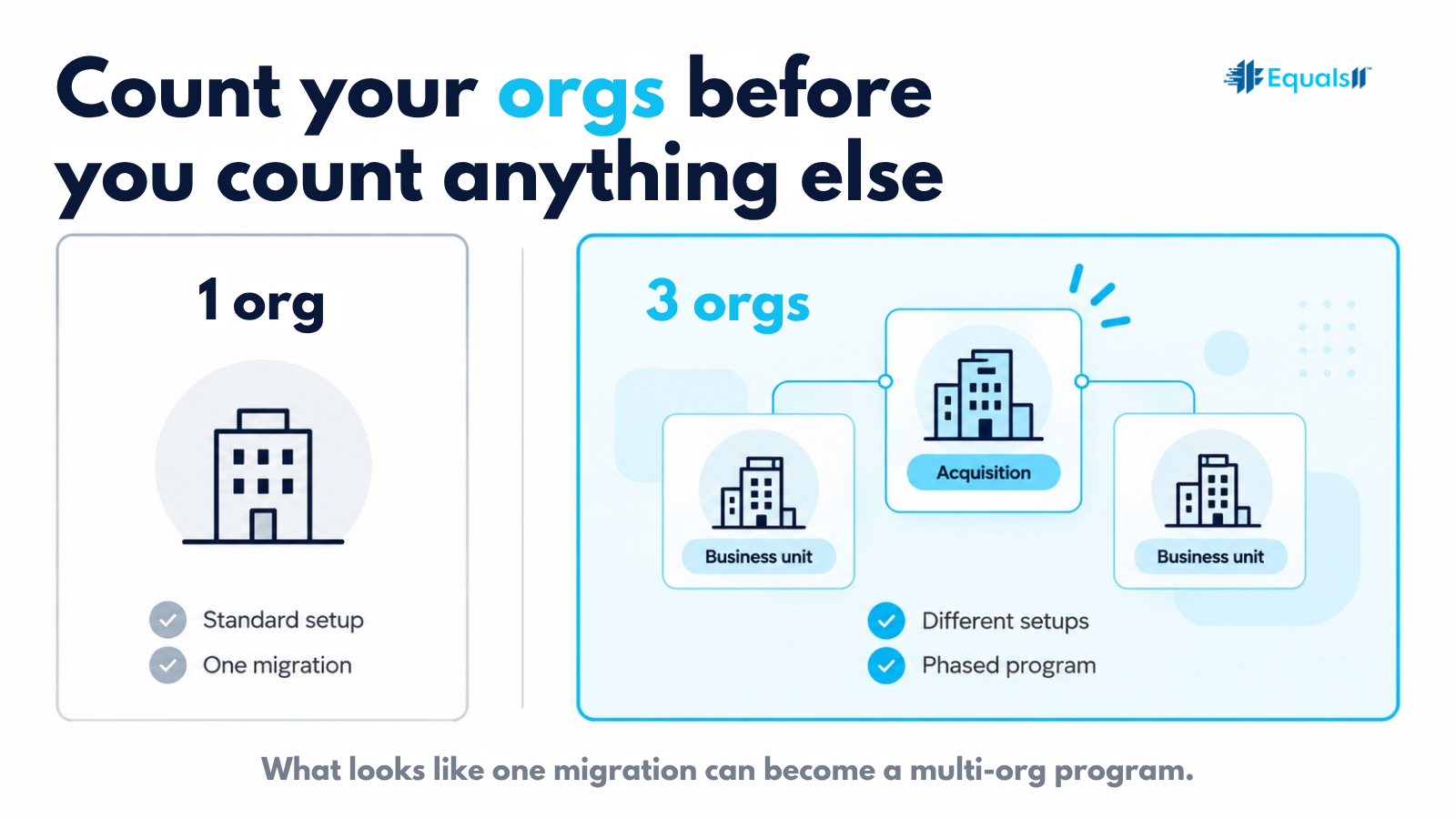
Count your orgs before you count anything else
Open Setup and pull every Call Center record. Each one points to an adapter, carries its own configuration, and gets assigned to a set of users. The team usually expects to find one.
Companies that grew through acquisition tend to find three. A business unit that came in with its own telephony contract stood up its own configuration, and nobody consolidated it because voice worked and there was always something more urgent. A pilot from four years ago is still sitting there with six users assigned to it.
That count decides the shape of the entire project. One org with a standard configuration is a migration. Three orgs on three different setups is a phased program with its own sequencing, its own change management, and a budget line that looks nothing like the one-org version. Finding that out in September gives you time to scope it. Finding it out in a kickoff meeting next spring means the number you already got approved was wrong.
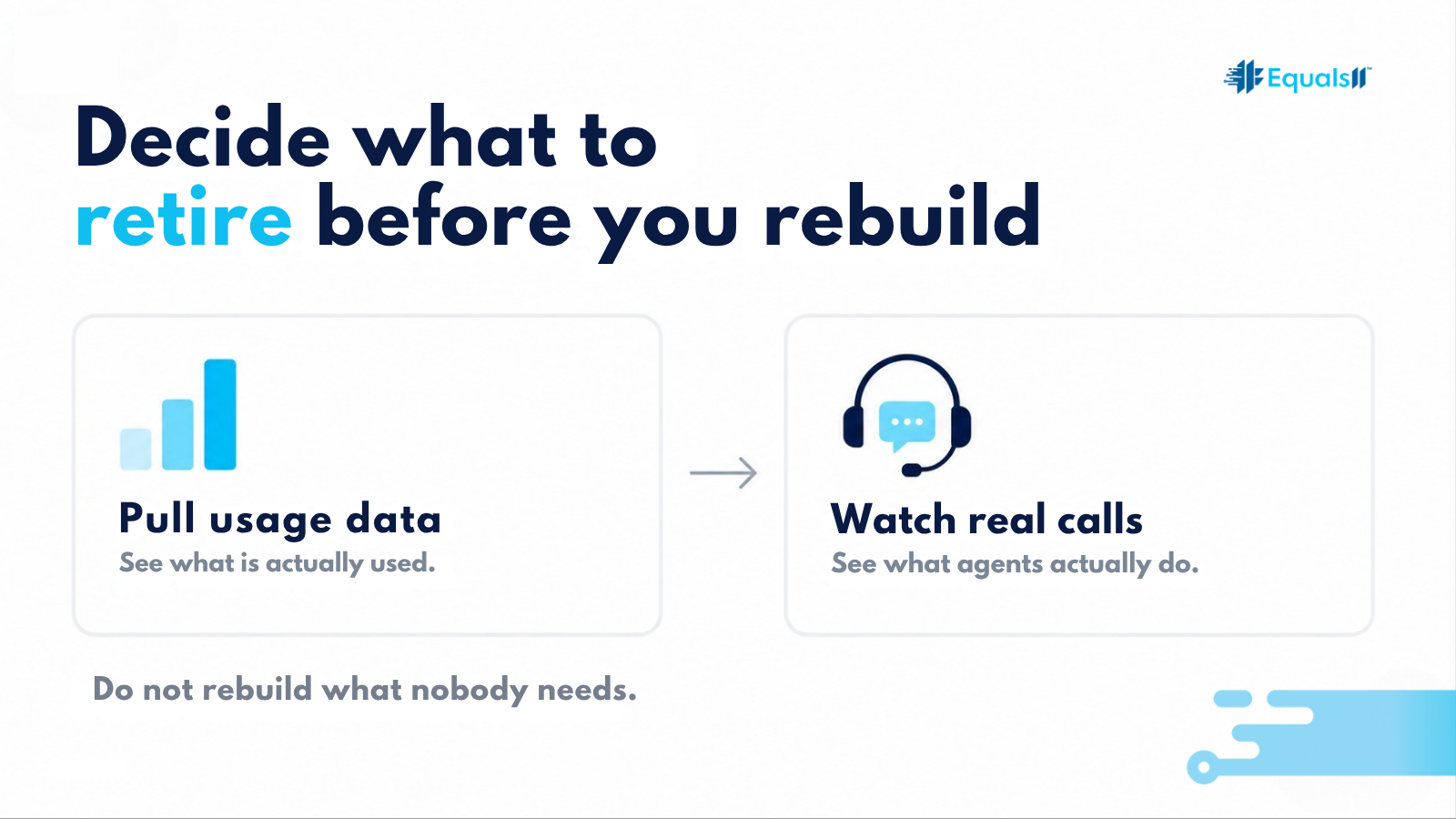
Decide what to retire before you decide what to rebuild
Standard migration advice says inventory everything and carry it forward. That advice is how a two-quarter project becomes a three-quarter project.
Pull the usage data on every screen pop, custom button, and softphone feature in the current setup. A screen pop that nobody has fired since 2023 costs the same to rebuild as the one your whole service floor depends on. Rebuild both, and you have paid twice for one working feature.
Then sit with a few reps and watch real calls. The gap between the documented process and what agents actually do is where the workarounds live, and workarounds are the clearest signal you have about what the original build got wrong. A migration is the one moment when redesigning those is cheap, because the architecture is already open. Carry them forward untouched, and you have paid to move a problem from one system into another.
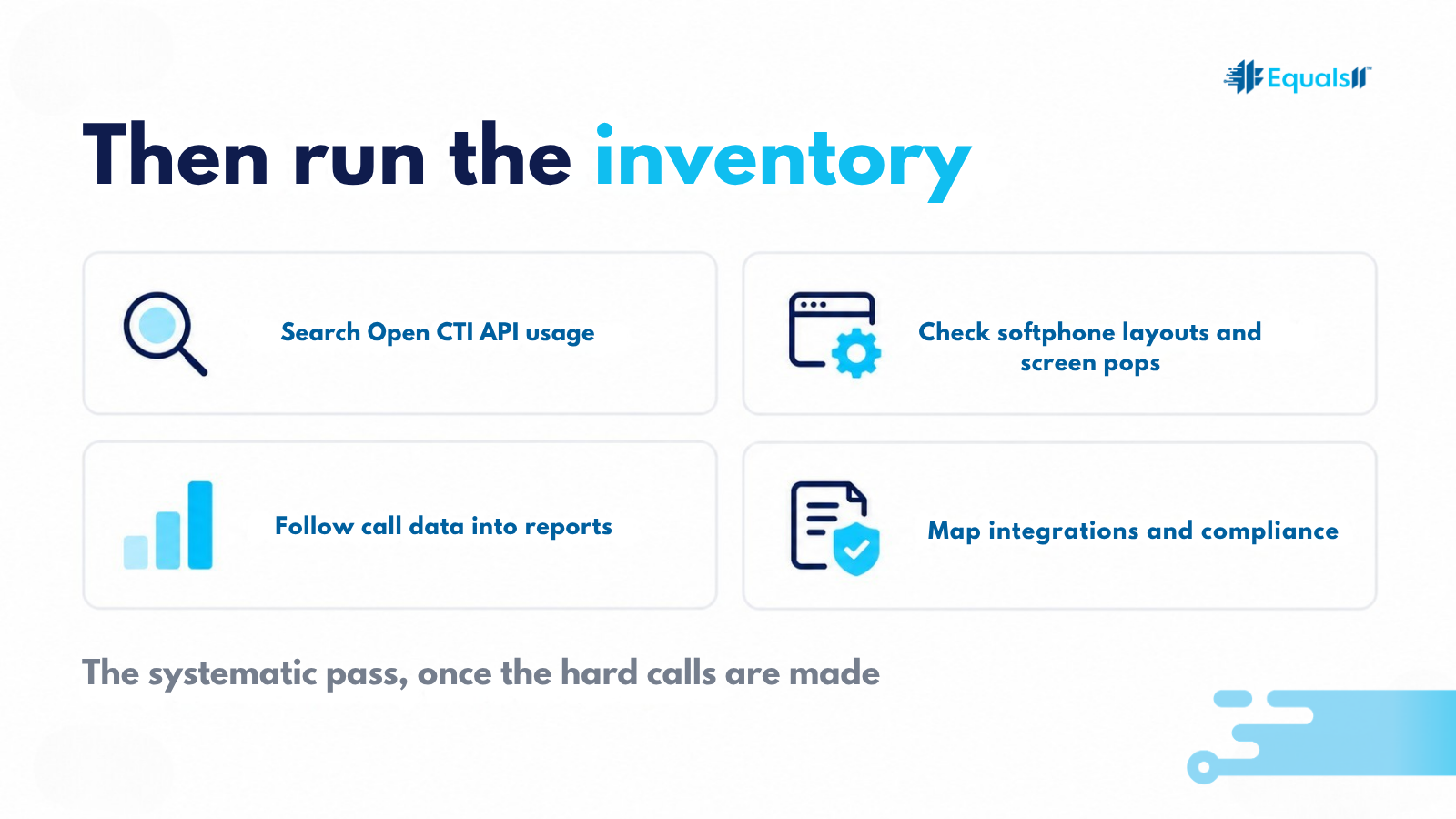
Then run the inventory
With the org count settled and the retire list drawn, the rest is systematic. Search the codebase for calls to the Open CTI JavaScript API, which catches the Visualforce components, Lightning components, and Apex that fire on call events. Check every softphone layout against the objects it references. Document the click-to-dial buttons and screen pop configurations that survived the retire pass.
Then follow the call data. It lands in Tasks, Activities, or a custom object, and the adapter set that shape. Every report, report type, and dashboard downstream inherited it. Service-level reporting, rep activity, disposition analysis, anything that feeds a QBR. The replacement writes call data differently, so each of those needs a decision before the migration starts: rebuild it, retire it, or accept that the number it produces will mean something new. Making those calls during the audit costs a few hours. Making them after a leadership meeting costs credibility you spend the next quarter earning back.
Last, map the integrations and managed packages that touch call records. Workforce management, quality monitoring, recording and retention, any middleware feeding a warehouse. Managed packages that bundle their own adapter deserve a direct conversation with the vendor, because their roadmap sets part of your timeline. Compliance-driven integrations go at the top of the list. Call recording retention obligations do not pause while you migrate, and a gap in that chain becomes a finding for your auditors instead of a ticket for your admin.
What the audit is actually for
Four paths sit in front of you. Salesforce Voice, bringing your own CCaaS, Agentforce Contact Center, or moving voice off Salesforce entirely. Each carries different licensing, different architecture, and a different volume of rebuild work. Choosing between them without the inventory is a guess in the shape of a decision, and over the life of the contract the difference between the right path and the wrong one for your org runs into the hundreds of thousands.
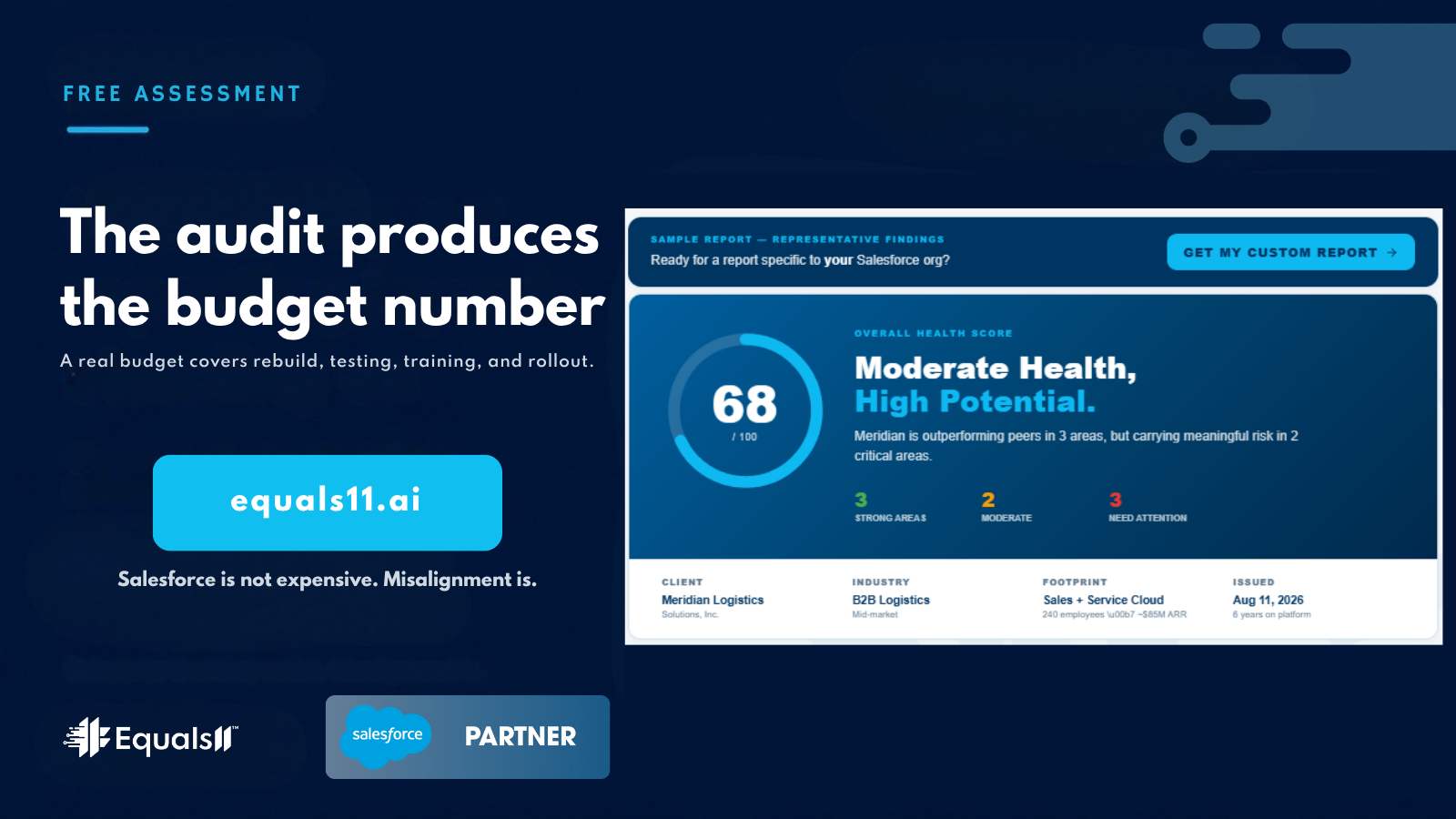
The inventory also produces the number. Not a vendor quote for licenses, but a real figure covering the rebuild, the testing, the training, and the phased rollout across every org you found. That is what a CFO can approve in this cycle. A range with no work behind it gets deferred to the next one, which is how a two-year runway turns into eight months.
Where Equals11 fits
Baseline is where this work lives. We inventory what depends on Open CTI across every org and business unit, separate what has to move from what should be retired, and hand you a costed plan tied to a specific migration path. The same team then builds it and runs the cutover, which is covered in How to migrate off Open CTI without downtime. If you are still working out what the retirement means for your business, start with What Open CTI retirement means for your business.
You migrate off Open CTI once. The audit decides what it costs.
Start with the free Salesforce Health Index at equals11.ai, or book a call at equals11.com/contact.
Frequently asked questions
What should an Open CTI migration audit include?
Every Call Center definition and its assigned users, usage data on the features currently in production, all custom code and components calling the Open CTI API, softphone layouts, screen pops and click-to-dial buttons, the objects and fields where call data is written, the reports and dashboards built on that data, and every integration or managed package that touches call records.
How long does the audit take?
Weeks, not months. The driver is how many orgs and business units run voice, and how much was customized after the original build. A single org with a standard configuration moves quickly. Three orgs from three acquisitions take longer, and that is worth knowing before you commit to a go-live date.
Do we need to pick a migration path first?
No, and picking first is the more expensive option. The path that fits depends on what you run today, what your reporting requires, and what compliance obligations sit on your call data. Audit first, then choose.
Can our internal admin run this?
Part of it. An admin can pull Call Center records, softphone layouts, usage data, and report inventories. The code search, the integration mapping, and the judgment about what to retire instead of rebuild usually need someone who has run a migration before. The audit is only useful if what it misses is nothing.
Is there still time before February 2028?
There is, if the work starts in this budget cycle. But those who wait beyond Q2 2027 to start will encounter a significant risk to completion in time. Vendor evaluation, a pilot, and a phased rollout across business units consume more calendar time than the deadline suggests. Open CTI is also already unavailable to newly created Agentforce Service orgs, so the direction is settled.
If you’re planning your Open CTI migration, we can help you make the move without unnecessary disruption, rework, or surprises.
Contact us for a seamless transition.
