
How to close knowledge debt and set your Salesforce org up for what's next
You have built a lot in Salesforce, and it is working. Automations fire, reports run, and the business keeps moving forward. That is worth celebrating. There is also a quieter thing worth getting ahead of, and a little attention now saves your team real effort later. It is called knowledge debt, and it is the gap between what your org does and what your team can still explain.
The good news is that this is fixable, and the teams that tackle it early move faster on everything that comes after, including AI.
What knowledge debt actually is
Knowledge debt grows when the reasoning behind your Salesforce setup lives somewhere your team cannot easily find it. Think of a flow that a former admin built, an old consultant deck, or a Slack thread from a reorg two years back. The work is great. The story behind it has just gone quiet.
Here is what makes it sneaky. The system keeps running beautifully, so it is easy to assume everyone still understands it. The fields populate. The automations fire. The "why does it work this way?" simply gets harder to answer over time.
Why does it happen to great teams?
Knowledge debt is not a sign that anyone did anything wrong. It is a natural byproduct of moving fast and shipping value. A talented admin builds quickly to unblock the team. A consultant delivers a project and moves on with the context in their head. A RevOps leader launches a process under a deadline and plans to write it up when things calm down. Things rarely calm down, because the next great idea is already in the queue.
Every one of those choices makes sense in the moment. The cost just tends to show up later, often at a big moment like a team change, an acquisition, an audit, or the day you decide to bring AI into the org.
Why can it go unnoticed
Knowledge debt does not throw an error. A misconfigured flow raises a flag right away. An undocumented one runs perfectly. Because everything works, it is easy to believe the whole team understands the why behind it. The clearest signal usually appears the first time someone goes to make a change and wants to be sure of what it might affect.
Signs to look for
In a healthy org, change feels routine. When knowledge debt builds up, change starts to feel like detective work. A few friendly signals to watch for. One person can explain a key automation, so things pause when they are out. Some custom fields and objects are hard to connect to a clear business purpose. The documentation describes an earlier version of the org. New work often starts by reverse-engineering what is already there. When "let me check who set that up" becomes a regular phrase, it is a good moment to invest in clarity.
Why is it worth solving
Knowledge debt rarely shows up as a line item, so it is easy to underestimate. The impact tends to surface in places you care about. Time that could go to new value goes to relearning old decisions. Outside help gets brought in to rediscover what the team already knew. A single team change can put a revenue-critical process at risk.
It also matters for what is next. AI and Data Cloud do their best work on clean, well-understood data and processes. When your team can clearly explain the org, you can point intelligent tools at it with confidence and trust the results. Closing knowledge debt is one of the most practical ways to get AI-ready.
Why the documentation push alone falls short
When teams take knowledge debt seriously, the first instinct is often a big documentation push. Capture everything. Build the wiki. Write the runbooks. That energy is great, and it goes further with a little structure behind it.
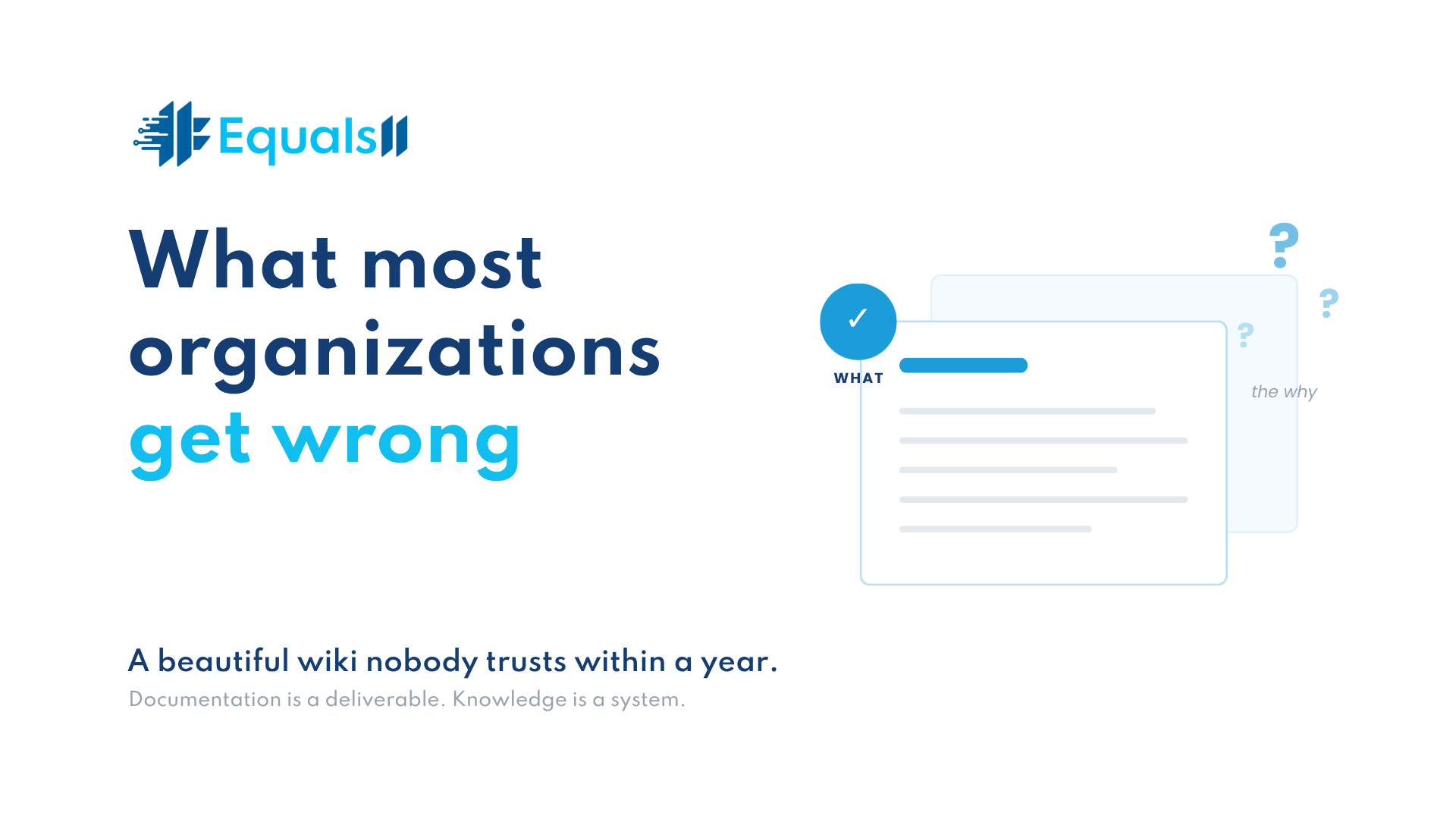
Here is the key. Documentation captures the what. Knowledge debt is really about the why. A field dictionary tells you a field exists. It does not always tell you which business rule it supports or what depends on it. Docs also drift over time, and a wiki nobody trusts can do more harm than good. The win comes from treating knowledge as an ongoing system, not a one-time project.
A simple plan that works
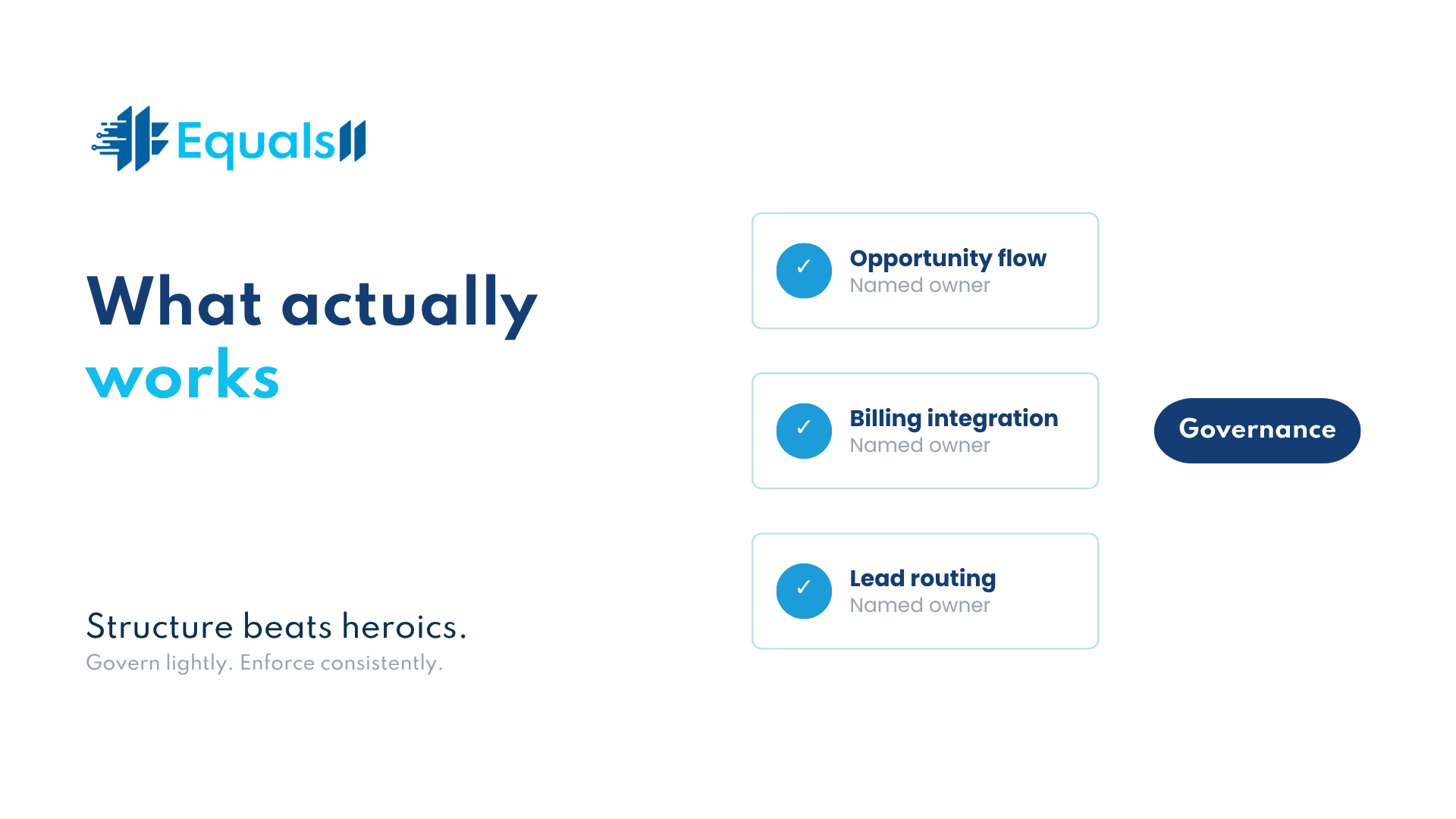
Lasting organizational knowledge comes from a little structure, and these steps are very doable. Give every major object, integration, and automation a named owner who keeps its purpose current. Capture the decisions and dependencies, not only the configuration, because what you can always rebuild from the org, and the why you cannot. Make knowledge transfer a real deliverable, so when a teammate or partner moves on, the context moves with the work. Put architecture reviews on the calendar so anything orphaned gets spotted early. And keep governance light and consistent, so capturing knowledge becomes a habit your team barely has to think about.
A good question to ask your team
Here is a friendly gut check. If the one person who knows your most important Salesforce process moved on tomorrow, how soon could your team confidently make a change? If the honest answer is a few weeks, that is simply knowledge debt, and now is a great time to get ahead of it.
Frequently asked questions
What is knowledge debt in Salesforce?
Knowledge debt is the gap between what your Salesforce org does and what your team can still explain. The system runs great. The reasoning behind it just lives in places that are hard to reach, like a former admin's memory, an old consultant deck, or a flow nobody remembers building.
How is knowledge debt different from technical debt?
Technical debt is built up that could be cleaned up, and slows down your releases. Knowledge debt is missing context that slows down your people. You can usually see technical debt in the org. Knowledge debt is quieter, and it tends to surface the moment someone wants to make a confident change.
What are the signs my Salesforce org has knowledge debt?
Watch for changes that turn into research projects. One person can explain a key automation. Some fields and objects are hard to tie to a purpose. The wiki describes an older version of the org. New work starts with reverse-engineering. When "let me check who set that up" becomes a weekly phrase, it is a good time to invest in clarity.
Why does writing documentation not fully fix knowledge debt?
Documentation captures the what, and knowledge debt is about the why. A field dictionary tells you a field exists, not which business rule it supports or what depends on it. Docs also drift over time. The lasting fix is a simple system with named owners, so the knowledge stays current.
How does knowledge debt affect AI and Data Cloud readiness?
AI and Data Cloud do their best work on clean, well-understood data and processes. When your team can clearly explain the org, you can bring in intelligent tools with confidence and trust the results. Closing knowledge debt is one of the most practical steps toward being AI-ready.
How do I reduce knowledge debt in my Salesforce org?
Give every major object, integration, and automation a named owner who keeps its purpose current. Capture decisions and dependencies, not just configuration. Make knowledge transfer a real deliverable when anyone moves on. Schedule architecture reviews so orphaned config gets spotted early. Keep governance light and consistent so knowledge capture becomes routine.
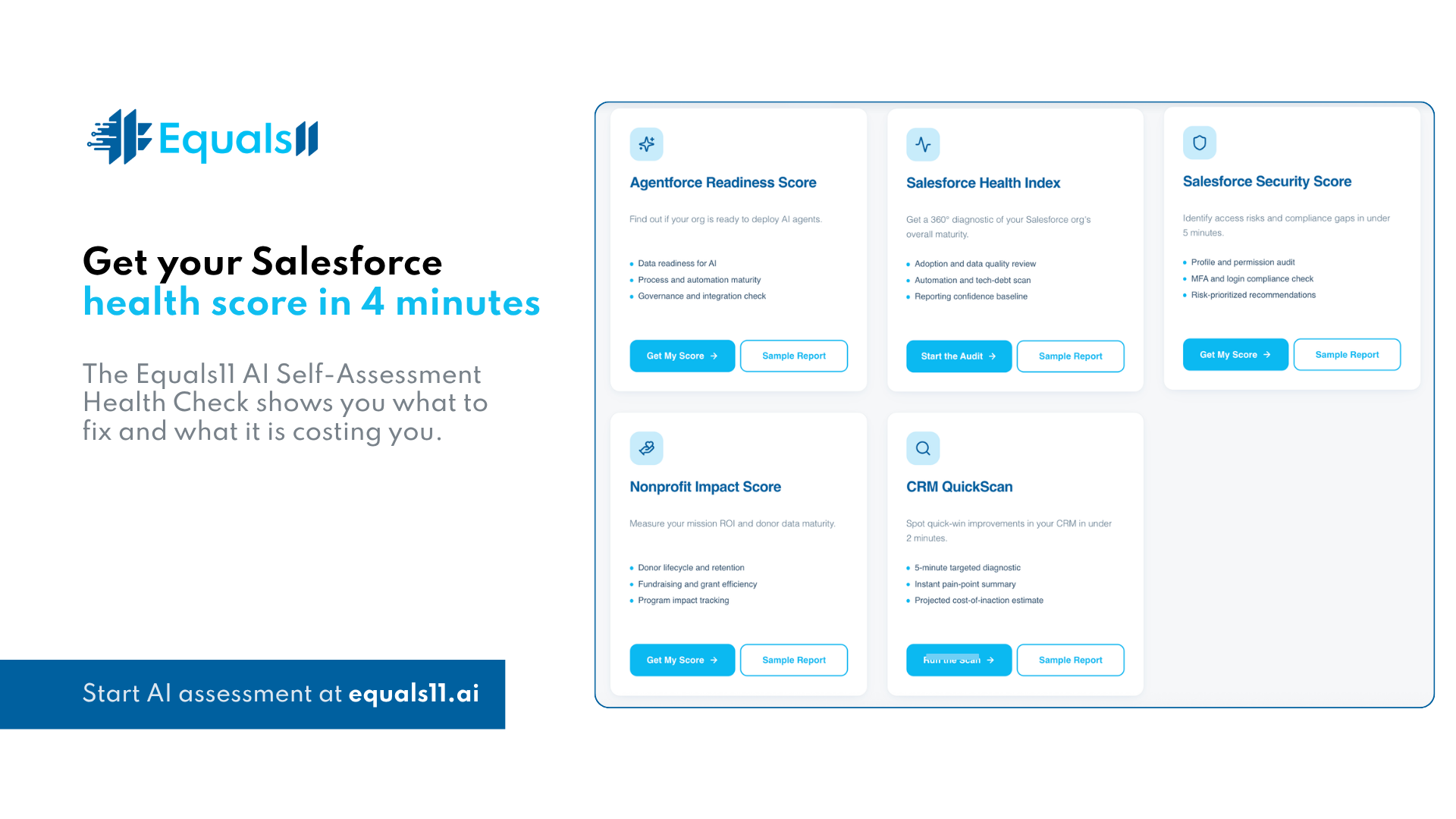
Find out how much knowledge debt your Salesforce org is carrying. Take the assessment at equals11.ai.
