
The Definitive Guide to Salesforce HIPAA Compliance for Healthcare Companies in 2026
In 2026, HIPAA compliance is no longer a legal checkbox for healthcare companies using Salesforce. It is a measurable financial risk, an operational responsibility, and increasingly, a leadership accountability.
Healthcare organizations are centralizing more patient data, workflows, and analytics inside Salesforce than ever before. At the same time, enforcement activity from the U.S. Department of Health and Human Services (HHS) continues to increase, and penalties are no longer symbolic. They are large, specific, and enforceable.
The challenge is not whether Salesforce can support HIPAA compliance. It can.
The challenge is that HIPAA compliance in Salesforce is never automatic, and in 2026, regulators expect organizations to understand that distinction.
This guide explains exactly how HIPAA penalties work today, how Salesforce fits into the compliance model, where healthcare companies most often expose themselves, and what practical, defensible compliance looks like in a modern Salesforce environment.
HIPAA Penalties in 2026: The Numbers Healthcare Leaders Need to Know
HIPAA penalties are not vague or theoretical. They are structured, tiered, and actively enforced.
In 2026, civil monetary penalties for HIPAA violations fall into four tiers, based on the level of negligence:
Tier 1 – Unknowing violations: $100 to $50,000 per violation
Tier 2 – Reasonable cause: $1,000 to $50,000 per violation
Tier 3 – Willful neglect (corrected): $10,000 to $50,000 per violation
Tier 4 – Willful neglect (not corrected): A mandatory minimum of $50,000 per violation
Each violation category is capped annually at $2,067,813 per year.
What this means in practice is often misunderstood.
A single misconfigured Salesforce permission that allows inappropriate PHI access is not “one violation.” If that access occurs repeatedly across multiple users or records, regulators may count each instance separately. This is how organizations reach seven-figure penalties without experiencing a dramatic breach event.
The financial impact also rarely stops with the fine. Most enforcement actions require Corrective Action Plans, external audits, staff retraining, and multi-year monitoring. These costs often exceed the penalty itself.
Why Salesforce Is Part of Your HIPAA Risk Profile
Salesforce is now a core system in many healthcare organizations. It supports patient engagement, care coordination, analytics, case management, and increasingly, AI-driven insights.
If Salesforce stores or processes Protected Health Information (PHI), including names, medical identifiers, treatment notes, or data that can reasonably be re-identified, HIPAA applies.
Salesforce operates as a business associate under HIPAA and offers a Business Associate Agreement (BAA) for specific covered services. That agreement is essential, but it does not make your Salesforce environment compliant on its own.
In 2026, regulators are clear on this point. Salesforce secures the platform. Your organization secures how it is used.
The Shared Responsibility Model That Causes Most Violations
Salesforce is responsible for infrastructure-level security. This includes data centers, network protections, baseline encryption capabilities, and platform availability.
Healthcare companies are responsible for everything built on top of that foundation.
This includes what data is entered as PHI, which users can access it, how long it is retained, how it flows through automations and reports, and how staff are trained to handle it.
Many HIPAA violations tied to Salesforce in recent years have not resulted from hacking or system failure. They have resulted from poor configuration, excessive access, and lack of governance.
What Counts as PHI in Salesforce Under HIPAA
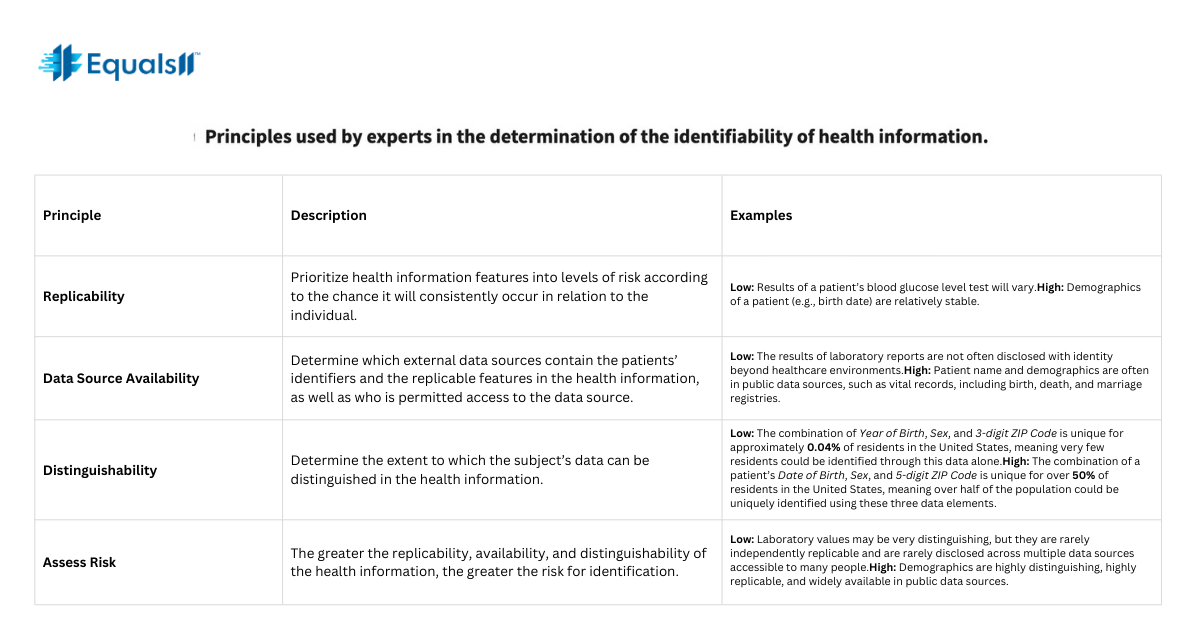
In practice, HIPAA does not protect “data” in isolation. It protects health information that can identify an individual.
Under HIPAA’s Privacy Rule, information becomes Protected Health Information (PHI) when it is both:
Related to an individual’s health, healthcare, or payment for healthcare, and
Linked to identifiers that could reasonably be used to identify that individual
To clarify what qualifies as identifying information, HIPAA defines 18 identifiers under its Safe Harbor de-identification standard. If any of these identifiers are present alongside health-related data in Salesforce, the information is considered PHI and must be protected accordingly.
These identifiers include patient names, all geographic subdivisions smaller than a state, all elements of dates related to an individual (such as birth dates, admission dates, or discharge dates), telephone and fax numbers, email addresses, Social Security numbers, medical record numbers, health insurance beneficiary numbers, account numbers, certificate or license numbers, vehicle identifiers, device identifiers, website URLs, IP addresses, biometric identifiers such as fingerprints or facial data, full-face photographic images, and any other unique identifying number, characteristic, or code.
It is important to note a key nuance that many teams miss.
Identifiers such as IP addresses, URLs, or device identifiers are not automatically PHI on their own. They become PHI when they are associated with health information inside a designated record set. In Salesforce, this association often happens unintentionally through custom fields, notes, activity logs, integrations, or analytics tools.
This is why Salesforce HIPAA compliance in 2026 is not just about securing obvious fields like medical record numbers. It requires understanding how seemingly harmless data points can combine to re-identify an individual, especially in highly customized CRM environments.
Healthcare organizations that fail to map and govern these identifiers accurately often believe they are compliant while unknowingly storing or transmitting PHI in noncompliant ways.
Where Salesforce HIPAA Compliance Breaks Down in Real Organizations
In 2026, the most common compliance failures follow predictable patterns.
Healthcare teams often store more PHI than necessary in Salesforce because it feels convenient. Over time, this creates unnecessary exposure with no operational benefit.
Access models are frequently too broad. Users accumulate permissions as roles change, and few organizations revisit access regularly. From a HIPAA perspective, this violates the “minimum necessary” standard.
Automations introduce additional risk. Email alerts, flows, and integrations can quietly transmit PHI outside of approved systems. Each integration connected to Salesforce expands the compliance surface area and must be evaluated independently.
Audit logs are also often treated as a technical feature rather than a compliance process. HIPAA expects not just logging, but active review and documented oversight.
What a HIPAA-Compliant Salesforce Architecture Looks Like in 2026
A defensible Salesforce environment starts with precision, not restriction.
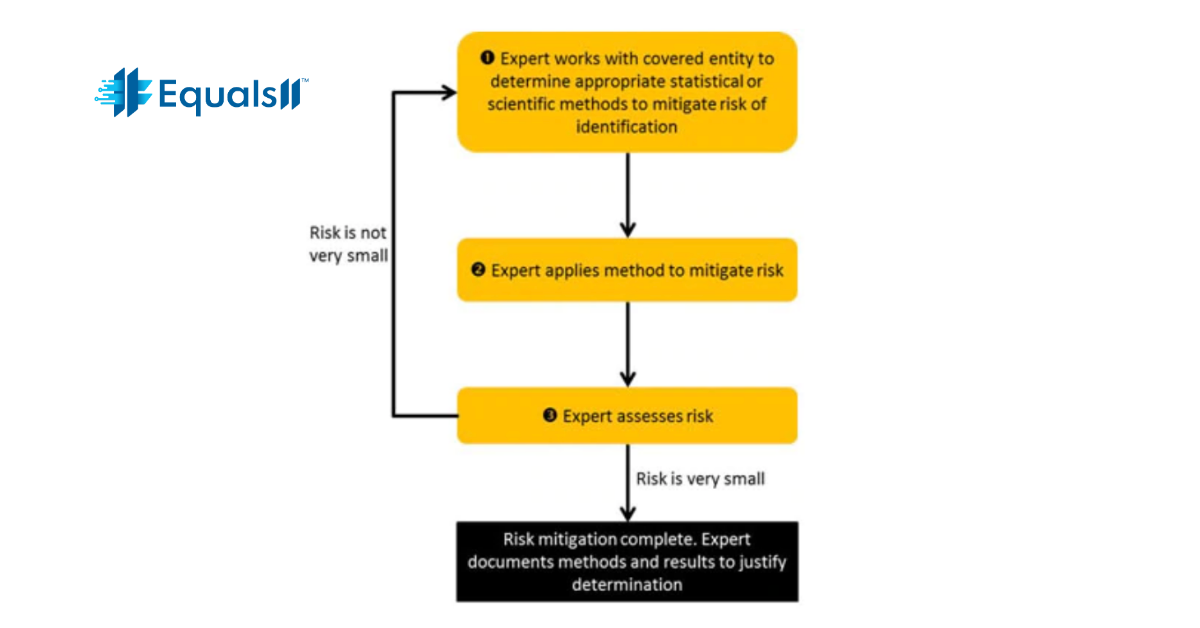
Healthcare companies must first identify exactly where PHI exists in Salesforce and why it is there. This includes structured fields, unstructured notes, attachments, and data created by integrations.
From there, Salesforce should be configured so that PHI access is role-specific, time-bound, and reviewable. Data retention policies should remove PHI that no longer serves a clinical or operational purpose. Encryption should be applied intentionally, not globally, to avoid breaking usability while still protecting sensitive fields.
Administrative safeguards are equally important. Staff must understand what constitutes PHI in Salesforce, how automations behave, and how to report potential incidents. Policies must be documented and revisited as Salesforce features evolve.
In 2026, HIPAA compliance is judged as much by governance discipline as by technical controls.
Salesforce AI and HIPAA: What Is Actually Safe in 2026
Salesforce AI tools such as Einstein and Agentforce are now standard in healthcare roadmaps. They can be used with PHI, but only under strict conditions.
AI systems must operate within controlled data boundaries, with limited access, defined purposes, and auditable outputs. Training data, prompts, and automation logic must all be reviewed through a HIPAA lens.
Treating AI as just another feature is one of the fastest ways to introduce compliance risk in 2026.
How Equals 11 Helps Healthcare Companies Stay Compliant
Equals 11 works with healthcare organizations that already rely on Salesforce and need clarity rather than guesswork.
We begin by analyzing how PHI actually flows through your Salesforce environment, from user access to automations to integrations. This exposes risk that is often invisible in surface-level reviews.
From there, we design Salesforce architectures that meet HIPAA requirements while still supporting operational efficiency, analytics, and growth. Our focus is not just compliance at go-live, but sustainability as Salesforce evolves.
Verified healthcare client review
“Our engagement with Equals 11 has been great, and just what we needed. We are a small company with limited resources, and this engagement has helped us make our Salesforce environment more relevant and useful!”
- Healthcare & Life Sciences Client, USA (Salesforce AppExchange, Apr 2025)
Through ongoing managed services, Equals 11 helps healthcare teams adapt to new Salesforce releases, AI capabilities, and regulatory expectations without reintroducing risk.
If you want a clear, practical assessment of your current Salesforce HIPAA risk, you can book a consultation with Equals 11.
We’ll review your environment, identify exposure areas, and outline the specific steps needed to make your Salesforce setup defensible in 2026.
Compliance Is Now a Leadership Issue
In 2026, HIPAA compliance in Salesforce is no longer an IT-only concern. It is a leadership responsibility with real financial consequences.
Healthcare companies that treat compliance as a living system rather than a one-time setup are better positioned to scale safely, adopt AI responsibly, and maintain patient trust.
Salesforce can support that future, but only when it is designed, governed, and maintained with intention.
If you want to understand where your Salesforce environment truly stands today and what it would take to make it defensible in 2026, Equals 11 can help you get there with clarity and confidence.
