
How to make sure AI inside Salesforce is safe, compliant, and aligned with our business rules?
For all the hype around AI transformation, very few organizations focus on the factor that determines whether AI succeeds: governance. Inside Salesforce, this is critical because data, workflows, compliance, and customer interactions all operate within one connected ecosystem. When governance is weak, AI becomes unpredictable, hard to trust, and often too risky to scale. Most failures happen not because the technology lacks capability but because the organization was not prepared.
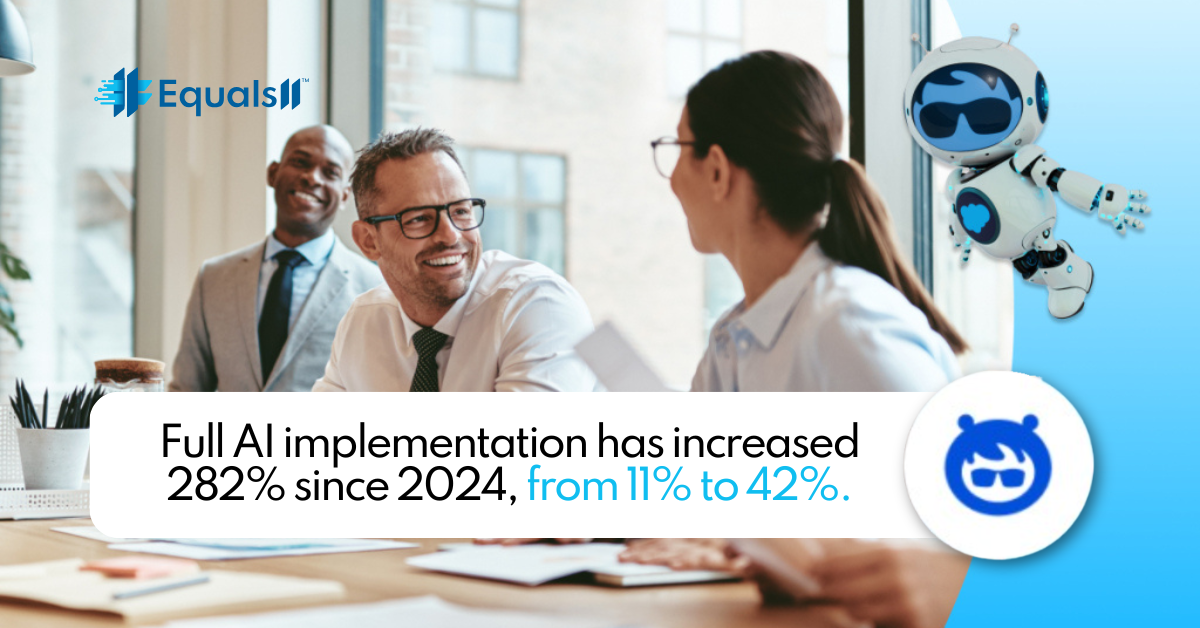
Recent Salesforce research highlights the challenges organizations face when adopting AI. Full AI implementation in enterprises has grown rapidly, increasing from 11 percent to 42 percent in one year, according to Salesforce’s CIO Trends research. At the same time, 96 percent of CIOs say their company either uses AI today or plans to within two years, showing strong intent but also pressure to get governance and readiness right.¹ Data quality and analytics also remain top concerns. In Salesforce’s State of Data and Analytics report, 84 percent of technical leaders say their data strategies need a complete overhaul in order for AI ambitions to succeed, emphasizing that poor or incomplete data foundations hold back AI progress. Sources:
Salesforce CIO Trends 2026: Full AI implementation figures.
Salesforce State of Data and Analytics for 2026: Data strategy readiness.
Many teams launch AI pilots without defining access rules, decision boundaries, or the level of human oversight required. They overlook data issues and skip risk evaluation, which erodes leadership trust and slows adoption. With the right guardrails, the opposite happens. AI becomes safer, more predictable, and significantly more effective.
Below is a concise overview of the governance framework that keeps AI inside Salesforce compliant, transparent, and aligned with business goals.
1. Data Permissions and Access Control
AI can only be trusted when its access is controlled. Governance begins by defining exactly what AI can and cannot see, including object visibility, field-level access, and handling of sensitive data. Restricting access to only what is necessary makes outcomes more predictable and prevents exposure of protected information. Strong data rules ensure AI actions reflect approved sources only.
2. Human-in-the-Loop Decision Boundaries
AI needs clear boundaries. Some actions can be automated fully, others require human approval, and some should remain entirely human-driven. Establishing these categories prevents unintended outcomes and strengthens adoption because teams understand where AI assists and where they retain control. This clarity creates natural collaboration between humans and AI.
3. Auditability, Traceability, and Transparency
Every AI action must be explainable. Effective governance includes logging prompts, outputs, and decision logic so teams can understand how a given action occurred. This enables quick issue resolution, supports compliance, and builds confidence in the system. Transparent AI earns trust and becomes easier to scale.
4. Risk Classification and Use Case Boundaries
Not all AI use cases carry the same level of impact. Some are operational and low-risk, while others influence financial decisions, customer interactions, or compliance-sensitive workflows. Classifying use cases by risk helps leaders decide which efforts can move quickly and which need deeper evaluation or tighter controls.
5. Model Testing, Quality Assurance, and Continuous Monitoring
AI cannot remain static. It requires ongoing testing to validate accuracy and fairness, along with monitoring to detect drift or performance changes. This steady oversight ensures long-term reliability, keeps AI aligned with evolving business processes, and increases organizational trust.
6. Change Management and Leadership Alignment
AI succeeds only when the organization is aligned. Leaders must understand the governance framework, the risks being managed, and who is responsible for oversight. Clear communication and documentation accelerate approvals, strengthen adoption, and give teams a shared understanding of how AI supports the business.
Why Safe AI Is Faster AI
Many leaders assume that governance slows progress, but the opposite is true. When guardrails are strong, AI launches more quickly because approval cycles shorten. Risk teams no longer block progress, and frontline users feel safer experimenting with AI-supported workflows. Stable AI also eliminates the expensive rework that comes from ungoverned automation. The result is cleaner operations, higher adoption, and measurable business value.
How Equals 11 Helps Organizations Build Safe and Scalable AI Inside Salesforce
Most organizations struggle with AI because they attempt deployment before their data, processes, and governance structures are ready. Equals 11 helps clients build the foundation required for long-term success. Our team designs AI governance frameworks, establishes permission structures, evaluates data readiness, builds operating models for AI inside Salesforce, and creates monitoring standards for continuous improvement. We guide organizations through the entire lifecycle, from exploration to full adoption.
Our work is supported by practical resources featured on our website, including the Salesforce eBooks collection
https://www.equals11.com/ebooks
the Playbooks library, where you can find the AI Readiness Checklist for Salesforce
https://www.equals11.com/playbooks
This approach has already helped organizations achieve measurable results. A manufacturing company improved forecasting accuracy by more than twenty percent with governed AI and human review points. A nonprofit used our compliance-focused governance model to deploy AI segmentation safely without exposing sensitive information.
If you want clarity on where to start, all it takes is a short conversation. In just 20 minutes, we can walk you through what it takes to make your Salesforce environment AI-ready, what guardrails you need, and where the highest-value opportunities sit inside your org.
Book a strategy session
Give us 20 minutes, and we will show you exactly how to deploy AI safely, confidently, and aligned with your business rules.
