
How Salesforce helps you scale without breaking what works
When growth outpaces your systems, every growing business eventually reaches a point where the systems that once supported the team begin to hinder progress. Reports take longer to load, teams rely on side spreadsheets, and leadership starts questioning whether the data reflects reality. Most organizations do not outgrow Salesforce as a platform. They outgrow the early version of Salesforce that was never updated to match the pace of growth.
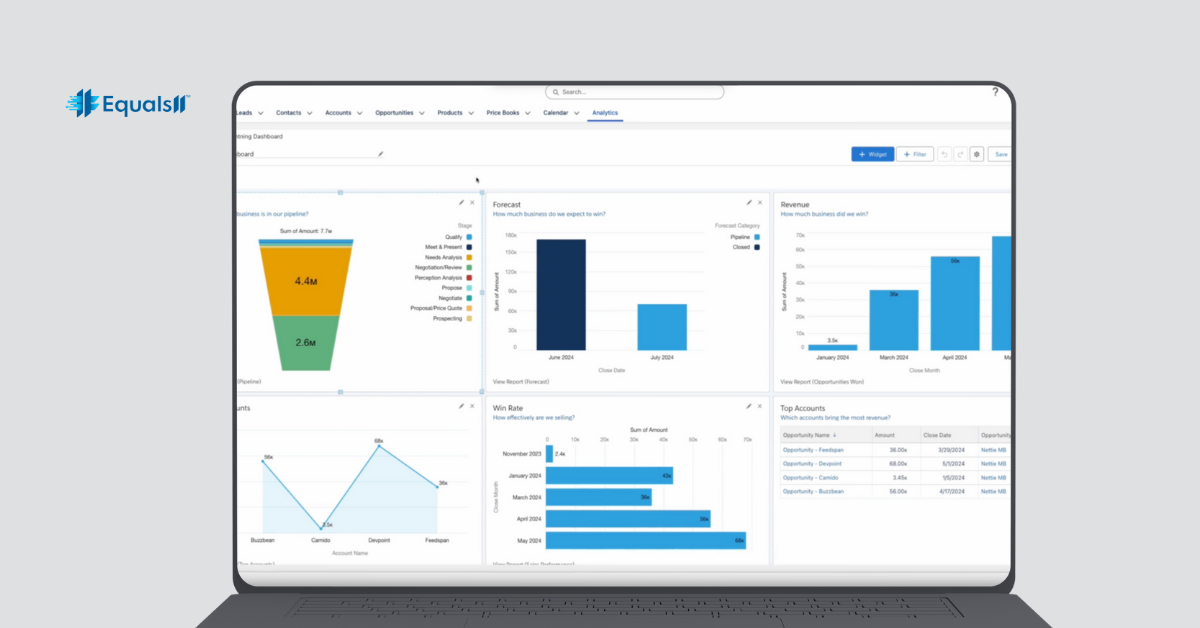
As your business evolves, three pressures inevitably get heavier.
1. Your data volume multiplies
Growth brings an increase in leads, accounts, opportunities, and automation activity. All this information begins to push against an environment originally designed for a much lighter workload. If the system does not evolve at the same rate, performance slows, and operational friction becomes visible.
2. Your processes become more complex
A simple lead-to-opportunity workflow eventually expands into multiple business units, additional approval paths, partner involvement, product-specific journeys, and new compliance requirements. Your CRM must adapt to this added complexity. When it does not, teams start building workarounds that create even more inefficiency.
3. More teams rely on Salesforce data to make decisions
Marketing, sales, operations, finance, support, and leadership all depend on accurate, real-time data to guide their work. When the environment is not aligned with how these groups operate, data becomes unreliable, and collaboration weakens. This is where the real friction begins.
Scaling Efficiently Requires More Than Adding Features
Systems rarely fail because functionality is missing. They fail because Salesforce was never realigned to match new workflows, updated processes, evolving data needs, and a broader growth strategy. Treating Salesforce as a living system rather than a one-time project is essential. Growth demands continuous adjustment.
The Three Pillars of a Scalable Salesforce Environment
At Equals 11, we consistently see the same trend across scaling companies. The org is not failing. It simply has not evolved at the same pace as the business. A scalable environment depends on three essential pillars.
1. Alignment with every team that touches Salesforce
Scaling does not work when changes happen in isolation. Marketing needs visibility into the pipeline, sales needs automation that improves productivity, finance depends on accurate forecasting, and leadership requires trustworthy dashboards. When these teams are not aligned, Salesforce becomes a stagnant repository rather than a reliable system of record. We work directly with cross-functional teams to streamline processes and eliminate friction so that Salesforce supports the entire organization.
2. Proactive monitoring of Salesforce’s roadmap
Salesforce continues to evolve through major seasonal releases and ongoing enhancements. Most internal teams do not have the time to track updates to security, automation, limits, object behavior, APIs, AI functionality, or Data Cloud. As a certified Salesforce partner, we interpret these changes and help clients understand which updates matter and how to prepare for them. This approach prevents last-minute surprises and ensures your environment stays modern and stable.
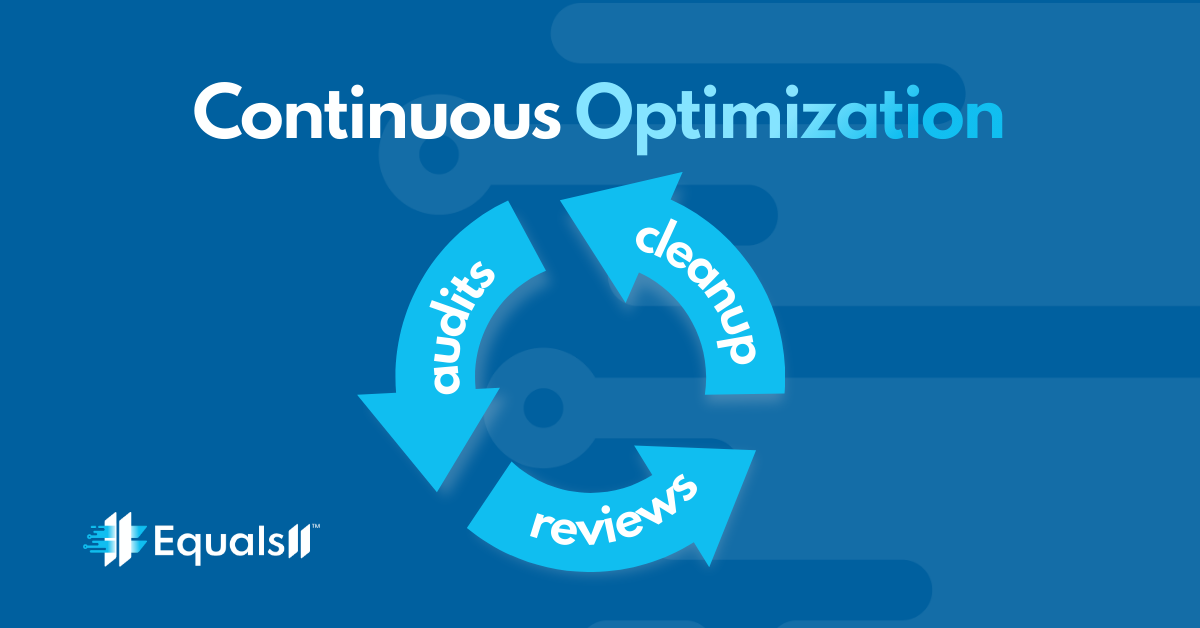
3. A clear plan for continuous optimization
Scalability requires intentional, ongoing care. Regular reviews, cleanup of outdated automation, removal of technical debt, process audits, and improvements to reporting and user experience all contribute to a healthy environment. Without this consistent attention, Salesforce can become bloated, confusing, or slow as the business grows.
A Real Example: Scaling Without Losing Momentum
A high-growth technology company approached us when their Salesforce environment could no longer keep up with their operations. After aligning with their teams, restructuring key workflows, and creating a long-term roadmap, their transition away from outdated processes happened smoothly and without disruption.
In their words, “Equals 11 provided a thorough analysis of our business, an MVP that worked immediately, and a transition with no relapse. It is comforting and encouraging to have a Salesforce partner who can prescribe Salesforce functionality so surgically.” Their experience reflects what scaling should feel like. It should be clean, strategic, and stable.
Your Business Is Growing. Your Salesforce Org Should Grow With It
If your Salesforce environment is slowing down your team, it does not mean you need a new CRM. It means your system must evolve with your strategy. This is where Equals 11 supports clients by improving operational alignment, designing scalable architecture, strengthening data quality, guiding roadmap adoption, managing release readiness, and supporting long term optimization.
Your Salesforce org should not be a bottleneck. It should be the infrastructure that helps your business scale confidently.
If you want clarity on what is slowing your environment down or what your next phase of growth requires, we offer a 20-minute Salesforce Efficiency Assessment. Book a call now.
