
The hidden costs behind free Salesforce Licenses: What nonprofits need to know
Salesforce gives nonprofits something incredibly valuable: ten free Nonprofit Success Pack (NPSP) licenses that are worth more than ten thousand dollars each year. For many organizations, this feels like a complete solution. But the truth is that licenses are only one part of the total cost of ownership.
Most nonprofits discover this slowly. Salesforce is powerful, but it requires clarity, planning, configuration, and ongoing support to deliver sustainable value. This article gives you a transparent view of the real costs nonprofits should expect once they start using Salesforce beyond the ten free licenses.
1. The free licenses cover your foundation, not your growth
The ten free Enterprise Edition licenses allow nonprofits to use the Nonprofit Success Pack (NPSP) for donor management, basic program tracking, and reporting. But organizations quickly outgrow the initial setup once they expand fundraising, communications, program delivery, or casework.
Teams usually need additional licenses for staff, volunteers, program coordinators, accounting, and operations.
Free licenses help you get started. They do not cover long-term growth.
2. NPSP is free, but many nonprofits eventually need Nonprofit Cloud
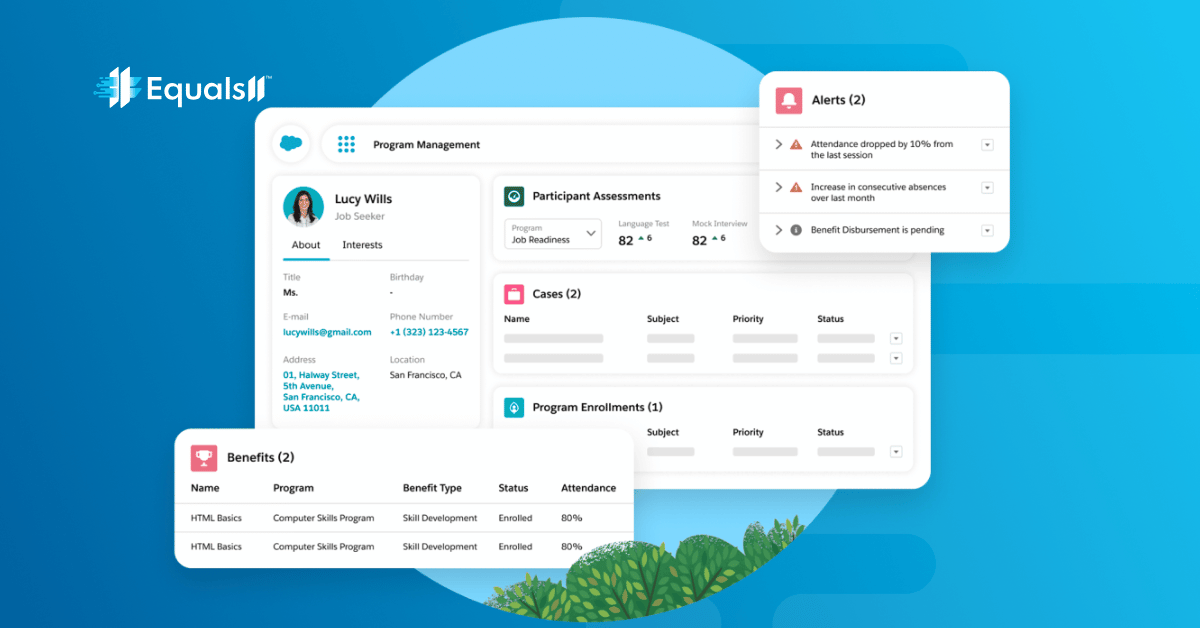
Salesforce development is shifting toward the new Nonprofit Cloud platform, which includes program management, case management, grantmaking, outcome measurement, and improved workflows.
These advanced capabilities are not part of NPSP and require paid licenses. Many nonprofits upgrade once they need modern reporting, more structured program management, or enterprise-level automation.
3. Email marketing and donor journeys require separate licensing
Salesforce does not include email marketing out of the box. If your nonprofit sends campaigns, newsletters, appeals, or automated donor journeys, you will need either:
Marketing Cloud Account Engagement
Marketing Cloud Engagement
Or a connected third-party email platform
This is often the first hidden cost nonprofits encounter.
4. Data 360 is the most misunderstood cost
Data 360 (formerly Data Cloud) creates a unified donor profile by combining history from donations, events, volunteer activity, digital behavior, service interactions, surveys, payments, and website engagement. It is extremely powerful, especially for organizations seeking AI-driven insights or personalized supporter experiences. However, Data Cloud requires its own license and usually a partner to configure it correctly, because the data mapping, transformation, and security work can be complex. Most nonprofits do not need Data 360 immediately, but it becomes valuable once the organization invests in personalization, automation, or multi-channel engagement.
5. Grants, case management, and program management often require add-ons
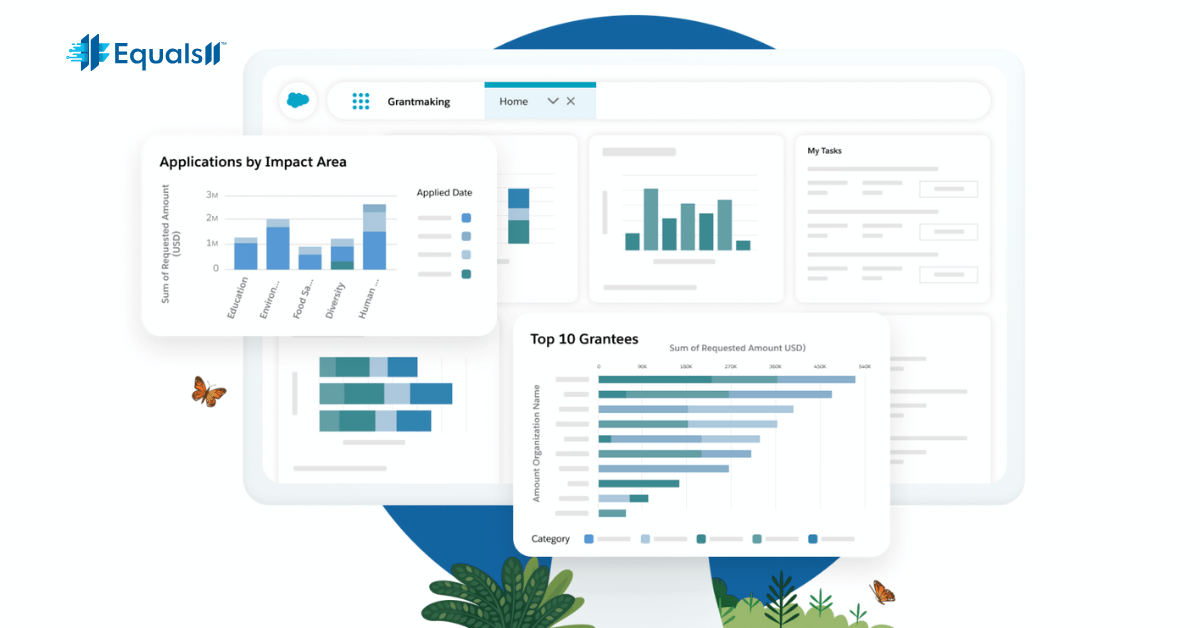
Some Salesforce capabilities that nonprofits rely on are not included with NPSP. Salesforce Grantmaking is used by organizations that distribute grants and need structured cycles and scoring. Case Management is essential for human services groups that work with clients or beneficiaries. Program Management becomes necessary for nonprofits that track outcomes or deliver services across multiple initiatives. All of these tools require additional licensing and configuration, and they quickly become core systems once a nonprofit starts using them, making early budgeting important.
6. AI is not included with your free licenses
Einstein AI, Generative AI tools, and Agentforce services require more than a simple toggle. They depend on clean, structured data, paid AI licenses, trust and security configurations, and governance that aligns with nonprofit compliance requirements. AI can drastically improve forecasting, segmentation, and client prioritization, but it has its own licensing and implementation costs. These should be planned realistically rather than assumed to be part of the free nonprofit package.
7. The highest hidden cost is configuration, not licensing
The most significant cost nonprofits face is rarely the license itself. It is the configuration behind it. A Salesforce org grows more complex as programs expand, teams shift, and data increases in volume. The real costs come from data cleanup, migration from legacy systems, integrations with donation or accounting tools, custom automation, ongoing admin time, user training, system enhancements, and the maintenance required for three Salesforce releases each year. Many nonprofits struggle not because Salesforce is too expensive, but because the system was never configured or supported correctly. The common phrase “We have Salesforce but it does not work the way we hoped” is almost always tied to implementation quality, not licensing.
8. How to budget Salesforce properly as a nonprofit
A simple model nonprofits can follow:
Year 1: Implementation
Set up, migration, customizations, and getting core features working.
Year 2: Optimization
Improving automation, reporting, donor journeys, and data governance.
Year 3 and beyond: Support and innovation
Ongoing admin, enhancement projects, AI adoption, and new features.
Salesforce is not a one-time project. It is a living system.
9. Get your Free Nonprofit Guide to Einstein Prediction Builder
If your nonprofit is considering AI, or if you want to understand how predictive analytics can improve fundraising, case management, or program delivery, Equals 11 created a practical resource to help you get started.
This guide explains:
how nonprofits can use Prediction Builder effectively
what data you need before AI will work
common pitfalls to avoid
the easiest entry points for small and mid-size teams
examples of nonprofit predictions that create real value
No email required. Completely free.
Download the guide:
https://www.equals11.com/ebook-nonprofit-guide-einstein-prediction-builder
This resource provides clarity that saves time, reduces risk, and helps you get more value from Salesforce.
Salesforce is incredibly powerful for nonprofits, but it requires a realistic understanding of the full ecosystem. The ten free licenses give your organization a strong start, but sustainable success comes from clarity, planning, and ongoing improvement.
If your nonprofit needs help assessing licensing needs, evaluating NPSP versus Nonprofit Cloud, or building a roadmap for AI and automation, Equals 11 is here to support you. Book a free 20-min AI consultation.
