
Are free Salesforce licenses really free for nonprofits?
Yes, for your first ten users. Through the Salesforce Power of Us program, an eligible nonprofit receives ten Nonprofit Cloud Core licenses at no cost. At Salesforce’s current price of $70 per user per month, those free Salesforce licenses are worth $8,400 a year.
After that, nearly everything has a price, and very little of it shows up on the Salesforce invoice. The hidden costs land on different desks across the organization. Each team pays its share out of its own budget or its own week, so nobody sees the total. The biggest share is what we call the hours budget, the staff time your org consumes because it was never configured for how your nonprofit actually works.
We covered the add-on products in The hidden costs behind free Salesforce licenses. This post looks at the same question from inside the organization, desk by desk, so you can see who is paying for Salesforce today and what nonprofits need to plan for next.
The executive director pays for additional licenses.
Every staff member who works in Salesforce needs a license. Once fundraising, programs, and finance all work in the system, ten seats run out fast. Salesforce’s current nonprofit pricing lists Core at $70 per user per month, Advanced at $125, and Sales Max or Service Max at $285, all billed annually on an annual contract.
A 60-person team on Core pays for 50 additional licenses. That is $42,000 a year, renewed every year, and it climbs with every hire. Move the same team to Advanced and the renewal becomes $75,000. One detail surprises executive directors. Premier Success, the support plan bundled with Salesforce licenses, only activates once your nonprofit makes its first paid purchase. Until then, support comes from the Trailblazer Community and your own staff.
If your nonprofit runs NPSP on Enterprise Edition licenses donated under an earlier version of the program, confirm with your account executive how your renewal maps to today’s editions before the budget is set.
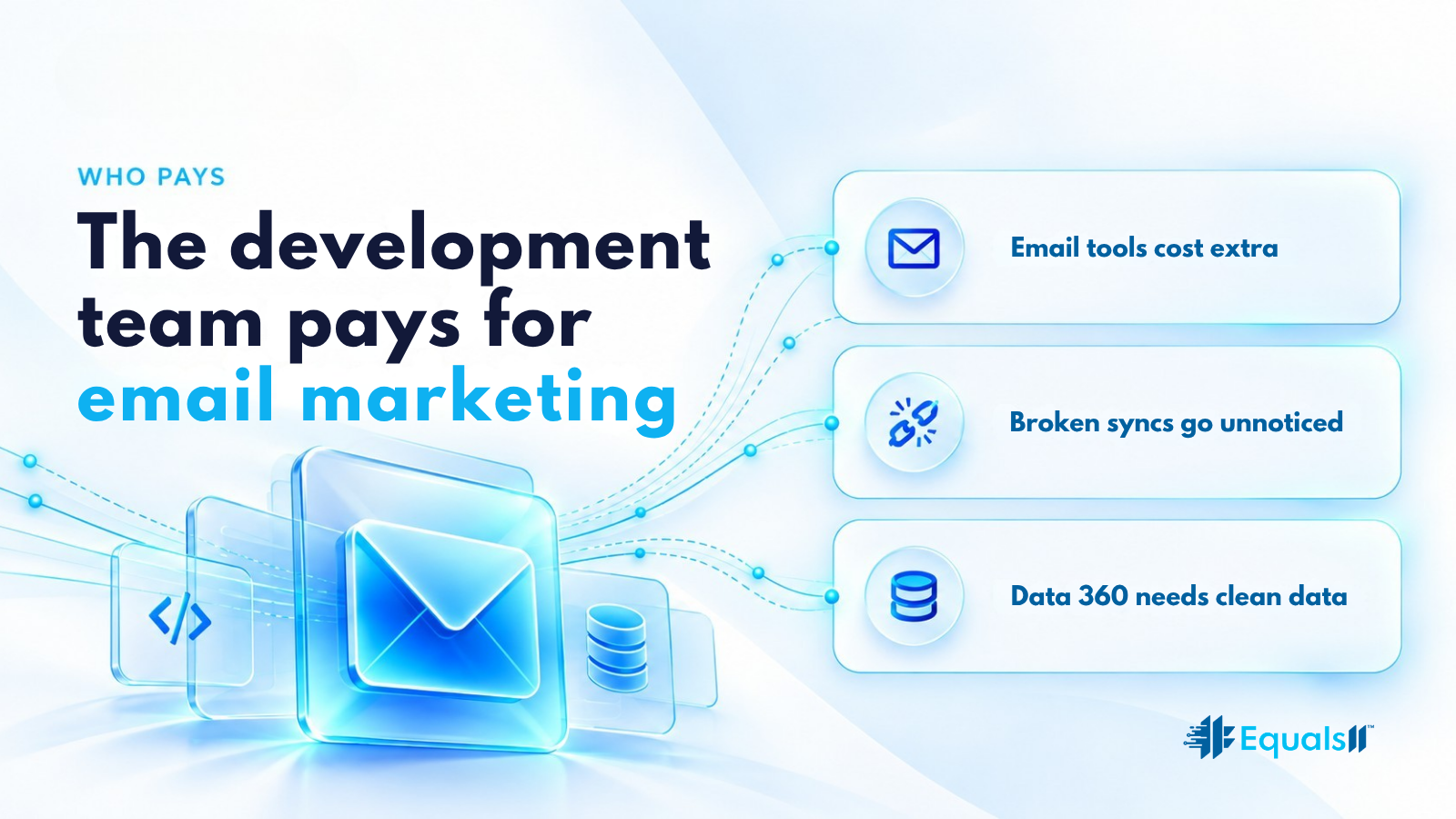
The development team pays for email marketing and donor journeys.
Salesforce does not include email marketing in Nonprofit Cloud. Appeals, newsletters, and automated donor journeys need Marketing Cloud Account Engagement, Marketing Cloud Engagement, or a third-party email platform connected to Salesforce. That cost usually lands in the development budget, and so does the work of keeping the sync healthy.
The sync is where the hidden cost grows. When email engagement stops flowing back to donor records, segments go stale, and the next appeal goes to the wrong people. Nobody gets an alert. The team finds out when response rates drop. Count the subscription, and count the hours someone spends watching the connection.
Data 360, formerly Data Cloud, often comes up next. It builds a unified donor profile from giving history, events, volunteer activity, and website engagement, and it can power personalized donor journeys. Salesforce prices it as an add-on through an account executive, and setup usually needs a partner. It returns the most when the donor data under it is already clean.
Program staff pays for case management, program management, and grants.
Salesforce lists program management, outcomes, and volunteer management as part of Nonprofit Cloud. Grantmaking comes bundled in the Sales Max and Service Max editions and is priced separately otherwise. On NPSP, case management and program management usually come from separate packages or custom builds.
Program teams pay for the gaps in time. When outcome data sits in objects that were never connected, a program manager rebuilds the same funder report every quarter by hand. Case workers keep side notes because the case record does not match how they serve clients. Those workarounds never appear in the technology budget. They still cost real hours every week, and the cost grows with every new grant.
Finance pays the hours budget.
Finance carries the most visible share of the hours budget. Someone reconciles Salesforce gift totals against the general ledger at month-end, and someone else re-keys batches from the online donation platform. Those hours sit inside salaries, so they look free.
You can measure them. Ask each team lead how many hours a week their team spends on Salesforce work that a properly built process would handle. Multiply by the number of people, by 52 weeks, and by a loaded hourly rate. We use $45 an hour as a working assumption. As an illustration, three gift processors at six hours a week each add up to 936 hours a year. At $45 an hour, that is $42,120, about what 50 paid Core licenses cost.
Put that number next to the license renewal and the conversation changes. The hidden cost of free Salesforce licenses is mostly configuration, and finance has been paying it in labor.
Operations pays for the NPSP decision, and the add-ons Core leaves out.
Whoever owns the org day to day carries two quieter costs. The first is the Nonprofit Success Pack (NPSP). It is free and still supported, with no announced end date, but it no longer receives new features. Salesforce builds new capabilities in Nonprofit Cloud, now called Agentforce Nonprofit. Moving there means a new org on a different data model built around Person Accounts, so every customization added to NPSP today raises the eventual migration bill.
The second is what Core leaves out. Salesforce lists 20MB of data storage per user on Core and 1GB on Advanced. Backup and Recovery, Archive, and Security Center are separate purchases on Core. A nonprofit with years of gift history should price storage and backup before it needs them, and keep a migration reserve in the plan even if the move is years away.
Leadership pays for AI readiness.
Einstein AI, generative AI tools, and Agentforce run on Flex Credits. Core includes 500,000 per org per year, and heavier use becomes a purchase. The higher cost is readiness. AI needs clean, structured data, trust and security configuration, and governance that fits nonprofit compliance requirements. An agent that reads duplicate donor records still spends credits, and staff still have to check its answers.
If leadership approves AI before the foundation is ready, the pilot stalls and the credits look wasted. For a working example, look at the National Kidney Foundation. Its VP of IT set a goal of turning Salesforce from a data repository into a working CRM, and Equals11 implemented Einstein Prediction Builder, then layered in Next Best Action so field teams had concrete, prioritized actions. Our free Nonprofit Guide to Einstein Prediction Builder covers what data you need before AI will work, and it requires no email.
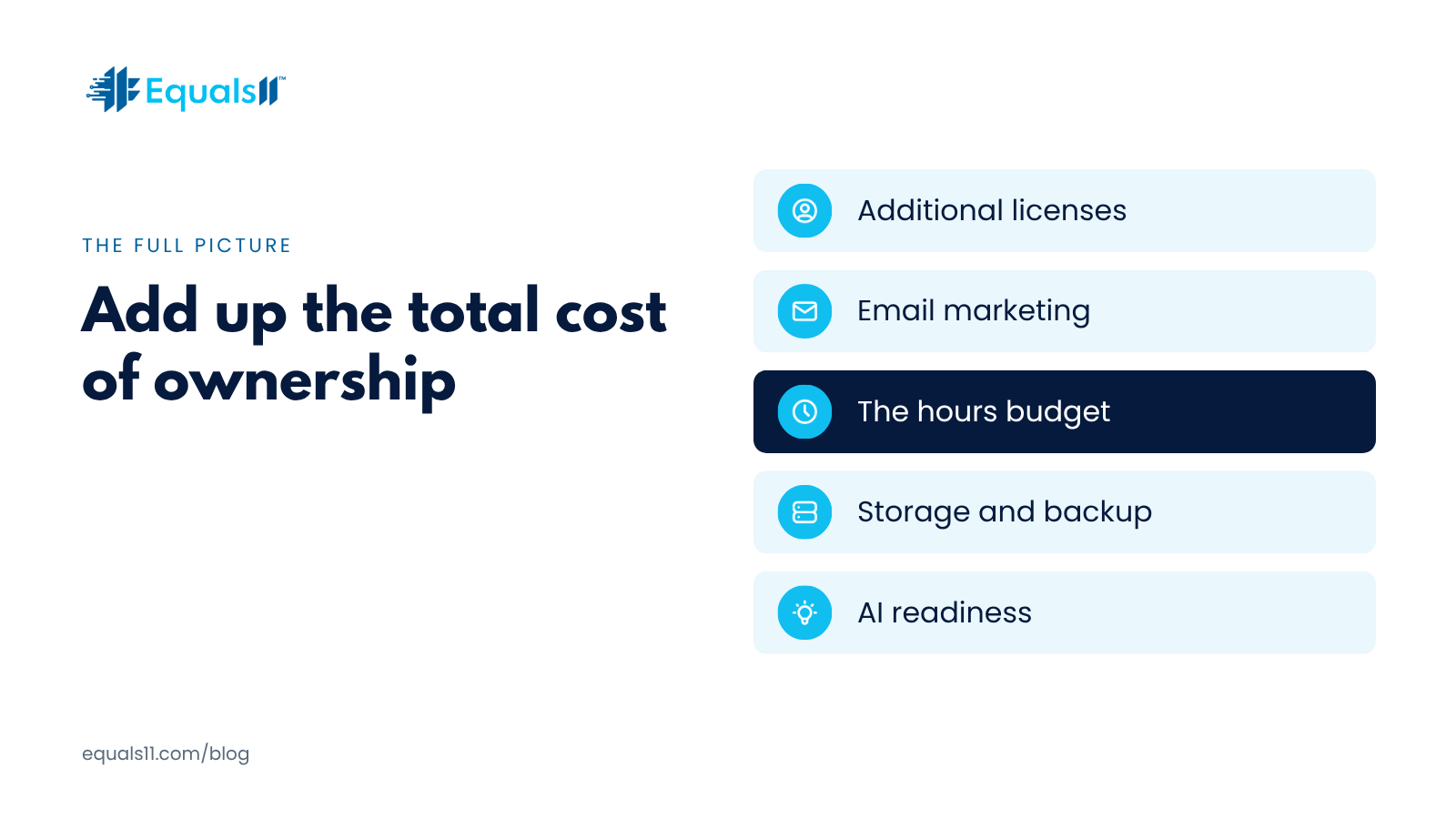
Add up the total cost of ownership.
Put every desk’s share on one page. Paid licenses from the executive director. Email marketing and donor journeys from development. Program workarounds and finance hours, which together make up the hours budget. Storage, backup, and a migration reserve from operations. AI readiness from leadership. That total is the real cost of Salesforce for your nonprofit, and it is the number your board should see.
The total also shows where to act. When the hours budget is the largest line, more licenses or more AI will raise the cost and leave the cause in place. The fix sits in configuration, with data quality and governance put right before any new automation goes live.
Salesforce donated the first ten licenses. What happens after that is an execution job. Equals11 audits the org and fixes the configuration within the hours budget. Through Continuum, the same team stays on to keep it healthy, so the people who find the problem are the people who fix it.
Take the free Nonprofit Impact Score at equals11.ai to see where your org stands before your next renewal.
Salesforce is not expensive. Misalignment is.
Common questions about free Salesforce licenses for nonprofits
What do the free Salesforce licenses for nonprofits include?
Eligible nonprofits receive 10 Nonprofit Cloud Core licenses through the Power of Us program. Salesforce lists Core with the nonprofit data model, Accounting Subledger Growth, 500,000 Flex Credits per org per year, and Slack Business+. Premier Success activates once the nonprofit makes its first paid purchase.
What are the hidden costs of Salesforce for nonprofits?
The main ones are additional licenses past the first ten, email marketing tools, Data 360 and other add-ons, gaps in case and program management, storage and backup on Core, AI usage, an eventual NPSP migration, and the staff time spent on manual work the org should handle.
Is NPSP still free?
Yes. NPSP is free and still supported, with no announced end date. It no longer receives new features, and Salesforce builds new nonprofit capabilities in Nonprofit Cloud.
